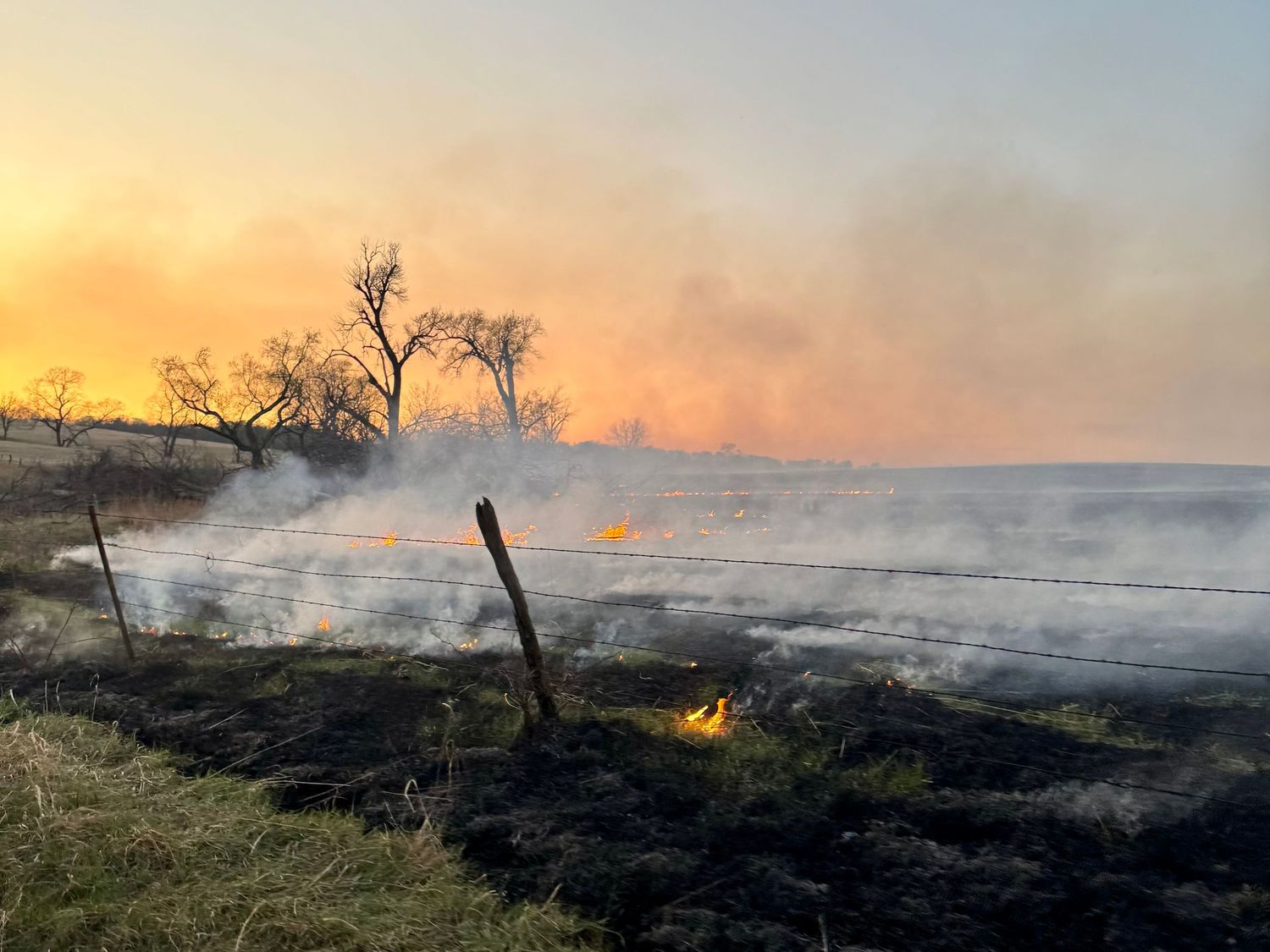
What's the smoke all about?
Each spring, a familiar smell drifts across the Kansas State University campus, often met with confusion and stuck-up noses from students. For many students, especially those not from eastern Kansas, a question is raised: What is causing this smoke?
The haze can feel like a cause for alarm, but for local ranchers, it’s a necessary sign of spring.
“They are intentional… called prescribed burns,” said Lanny Bosse, a rancher in Northeastern Kansas.
Unlike reckless wildfires, these burns are carefully planned management tools used to clear away dead grass, which in turn improves pasture health and allows new growth to emerge evenly for cattle.
“It basically preserves a prairie is what it does,” Bosse claims. Without the fire, he adds, the land would become a "mess" of brush, forcing ranchers to rely on chemical applications instead.
Beyond grass for cattle, the fire serves as a reset for the entire ecosystem by controlling invasive species like cedar trees. These trees are notorious for consuming massive amounts of water; in some areas, eliminating them via fire has actually caused dried-up creeks to begin running again.
“It enhances the whole ecosystem,” Bosse said. “If you do it consistently, it takes grass back to where it was 100 years ago”.
While some students may see the smoke as pollution, ranchers argue there is a larger environmental picture at play.
“Native grasses, sequester carbon, naturally, and they use CO2, and so by making the grass healthier, in theory, you probably have a net gain from one day of smoke,” said Bosse.
Bosse believes there is a “net gain” for the environment that outweighs a single day of smoke. To ensure this "net gain" doesn't become a hazard, the process requires intense preparation, including water tanks, specialized equipment, and a dedicated crew. Everything is weather-dependent.
“You pick the right wind and if you get help, you go do it," Bosse said. "If you don't have help, you don't,” said Bosse.
Safety also involves a burn permit, which acts as communication between the rancher and local authorities. By calling in their permit, ranchers ensure that if a passerby calls 911, the fire department doesn't waste resources responding to a "false alarm".
“They just want to know where it's happening,” Bosse shares. “We're not calling the fire department out for no reason,” said Bosse.
Ultimately, the smoke rolling through Manhattan is not a sign of disaster, but a reminder of the renewal required to maintain the tallgrass prairie. For the families working the land, it is a responsibility passed down through generations to ensure the land grows back stronger.
“It’s like everything in life," says Nora Bosse, Lanny’s daughter. "Sometimes you just have to burn it all down, start again to grow back better”.